Half-Lives and Tea Breaks: Finding Your Personal Caffeine Cut-Off
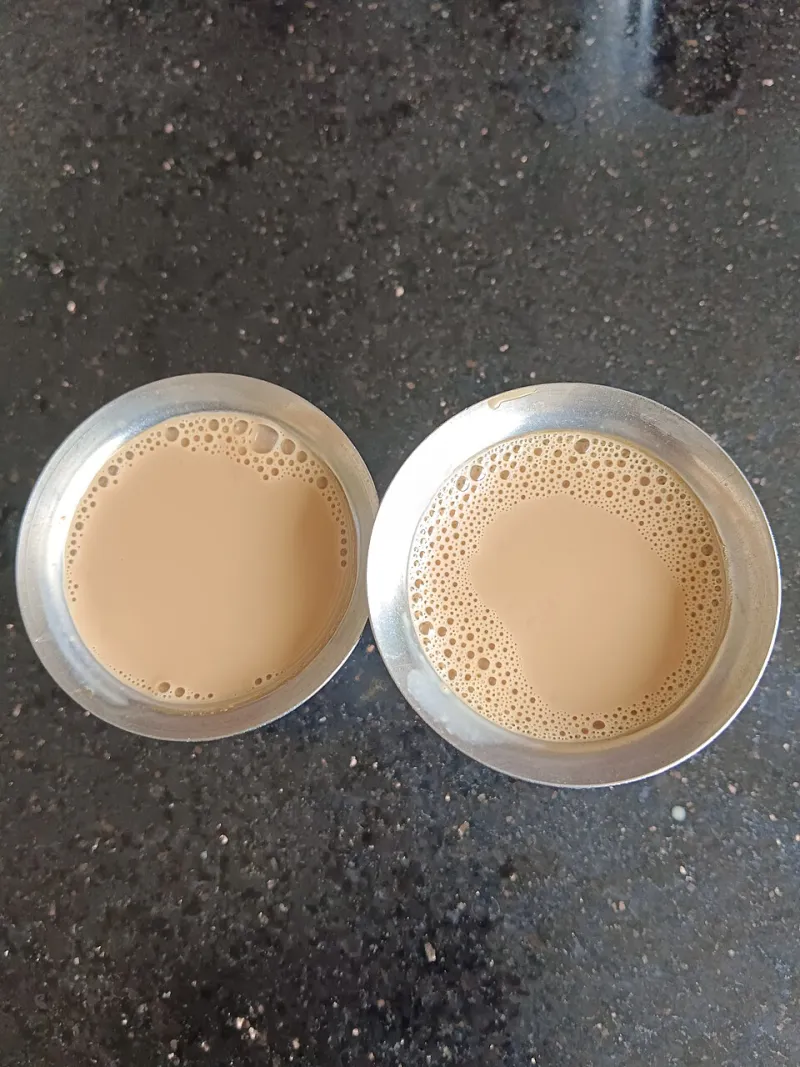
Photo: Darakshanehaluddin, CC0, via Wikimedia Commons
Ask most people in Britain to describe their working afternoon and a kettle will feature somewhere. Tea at the desk, a coffee on the way into a meeting, another round at four o'clock because the morning has caught up. Caffeine is so thoroughly embedded in daily life that its timing is rarely discussed with the same seriousness as screen use or bedtime routines. Yet for many people, the hour at which they stop drinking it has a more measurable effect on sleep than anything they do after nine in the evening.
This is not an argument for abandoning tea and coffee. Both are pleasurable, socially embedded and, without added sugar, broadly benign. The useful question is a practical one: what is your personal cut-off, and how would you know?
Caffeine, adenosine and the sleep that follows
Sleep pressure accumulates through the day as a molecule called adenosine builds up in the brain. Caffeine does not create energy; it blocks the receptors that would otherwise register that accumulating pressure. Tiredness is therefore masked rather than resolved, and the underlying substance is still present when the drink wears off.
The masking effect is only half the story. Caffeine is cleared from the body slowly, and the rate varies considerably between individuals. That is why two people can drink the same cup at the same hour and report entirely different nights.
The arithmetic of a half-life
The half-life of caffeine — the time taken for blood levels to halve — averages around five hours in healthy adults, with a commonly cited range of roughly three to seven. Slower clearance is not unusual and does not indicate ill health.
Run the numbers. A strong filter coffee containing 150mg of caffeine, drunk at 2pm, leaves roughly 75mg in the bloodstream at 7pm and around 37mg at midnight, assuming a five-hour half-life. For someone who clears caffeine over eight hours, the figures are closer to 100mg at 7pm and 50mg at midnight. That residue is not trivial: controlled studies have found that caffeine taken six hours before bed reduces objectively measured sleep by around an hour, even when participants report sleeping well and notice no difference.
That subjective blindness matters. People who say caffeine does not affect them are often describing their perception rather than their sleep architecture.
Why some people clear it more slowly
Several factors shift the half-life in one direction or another:
- Pregnancy slows clearance substantially. The NHS advises no more than 200mg of caffeine a day during pregnancy — roughly two mugs of instant coffee or three cups of tea.
- Combined hormonal contraception can roughly double the half-life, and some other medicines, including certain antibiotics and cardiac drugs, act on the same liver enzyme.
- Smoking accelerates clearance, which is one reason stopping can produce a fortnight of unexpected insomnia while the body readjusts.
- Genetic variation in the CYP1A2 enzyme and in adenosine receptors accounts for much of the difference between individuals.
- Age and liver function also play a part.
Where caffeine hides in a British kitchen
Most people underestimate their intake because they count cups rather than milligrams, and because several everyday products are not thought of as caffeinated at all. Typical amounts per serving are approximately:
- Mug of tea, around 240ml: 40–50mg
- Instant coffee: 60–100mg
- Filter or cafetière coffee: 100–140mg
- Single espresso: 60–80mg
- Green tea: 20–30mg
- Matcha, prepared traditionally: 60–70mg
- Cola, 330ml: around 40mg
- Energy drink, 250ml: around 80mg, with larger cans considerably more
- Dark chocolate, 50g: 20–30mg
- Decaffeinated tea or coffee: 2–15mg
- Some cold remedies, headache tablets and pre-workout powders: variable, occasionally substantial
Add these up for a typical day — two mugs of tea, an instant coffee mid-morning, a filter coffee after lunch and a square or two of dark chocolate — and the total can reach 300–350mg without anyone feeling they have been loading up. The European Food Safety Authority regards up to 400mg a day as safe for healthy adults, but the relevant figure for sleep is not the daily total; it is the amount still circulating at bedtime.
Setting a cut-off that survives real life
A reasonable starting point is to finish caffeinated drinks eight to ten hours before the time you intend to be asleep. For someone aiming to be asleep by 11pm, that means a last cup between 1pm and 3pm — earlier than most people expect.
That is a starting point, not a rule, and it should be tested rather than assumed. A few practical steps:
- Count for a week. Note drinks, approximate milligrams and times, without changing anything.
- Move the cut-off an hour earlier for a fortnight and keep a brief sleep diary: time to fall asleep, number of wakings, how rested you feel at seven in the morning.
- Protect the ritual, not the dose. Many people drink the fourth cup for the pause rather than the pharmacology. Decaf, rooibos or hot water with lemon often satisfies the habit.
- Consider a half-step. Mixing caffeinated and decaffeinated grounds, or switching from filter to instant in the afternoon, reduces the dose without abandoning the drink.
- Apply it at weekends too. A Saturday afternoon coffee can disturb Saturday night just as reliably as a weekday one.
When to seek advice
Occasional broken sleep is not a reason to see a GP. Persistent insomnia lasting more than three months, palpitations, unexplained anxiety, worsening reflux or a racing heartbeat after modest amounts of caffeine are all worth discussing. So is any question about caffeine during pregnancy, breastfeeding or while taking regular medication, since interactions are common and specific.
Cognitive behavioural therapy for insomnia is the first-line treatment for chronic insomnia and is available through GP referral in most areas. Reducing caffeine beforehand improves the odds of that treatment working.
The 2pm question, in the end, is not about whether Britain should give up its tea. It is about noticing that a cup has a duration — and that the afternoon brew is still in the bloodstream long after the mug has been washed up.